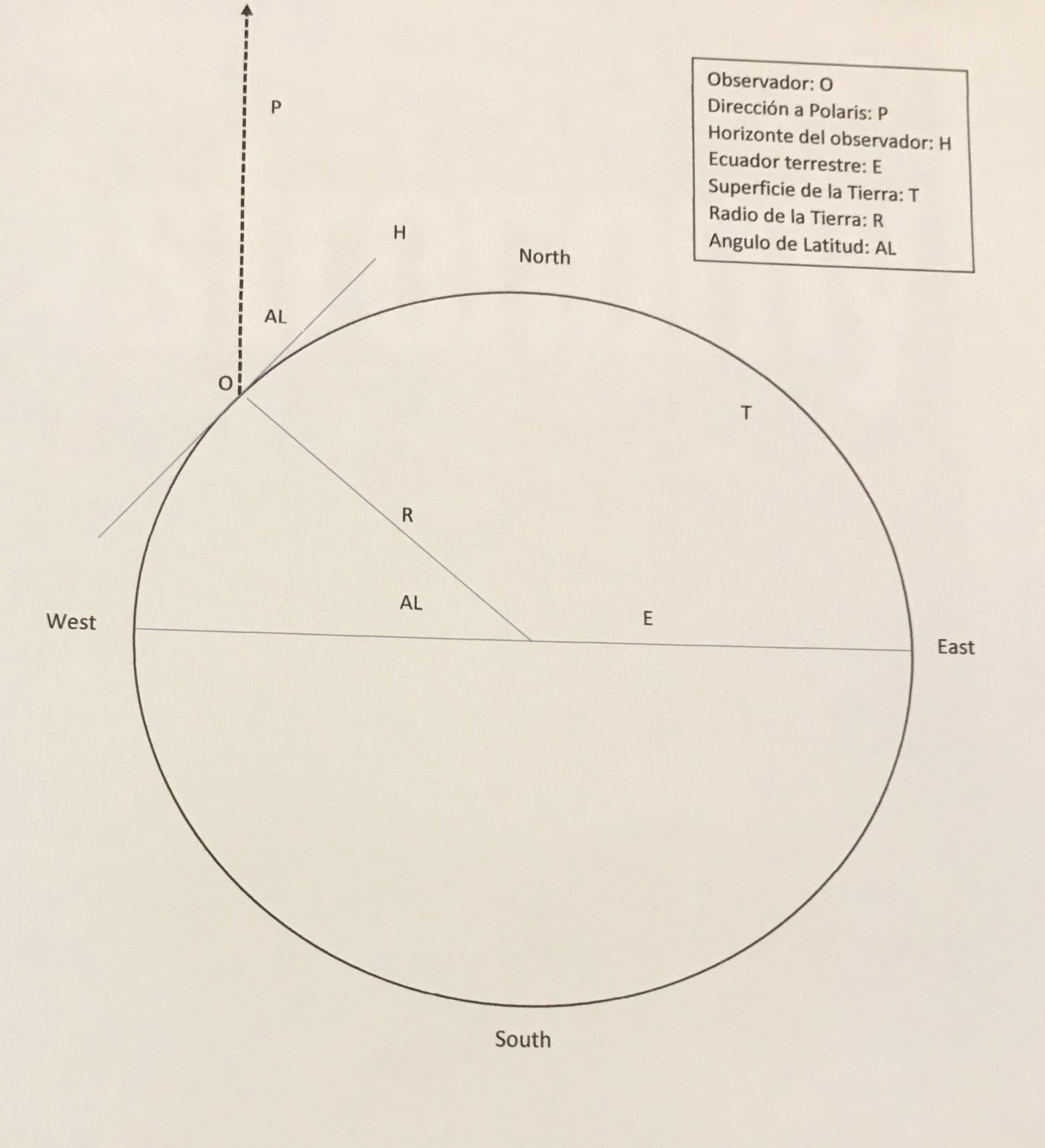
From the illustration in Trivia 6, you must have gotten the idea that all what we see, is above the horizon. Wherever you live, you have your own horizon. Imagine a person 1.7 m tall, lying somewhere on the Earth that has a circumference length of 40,074 kilometers. That person has covered a surface ofContinue reading “Trivia 7”
Author Archives: pkrumbein
Trivia 6
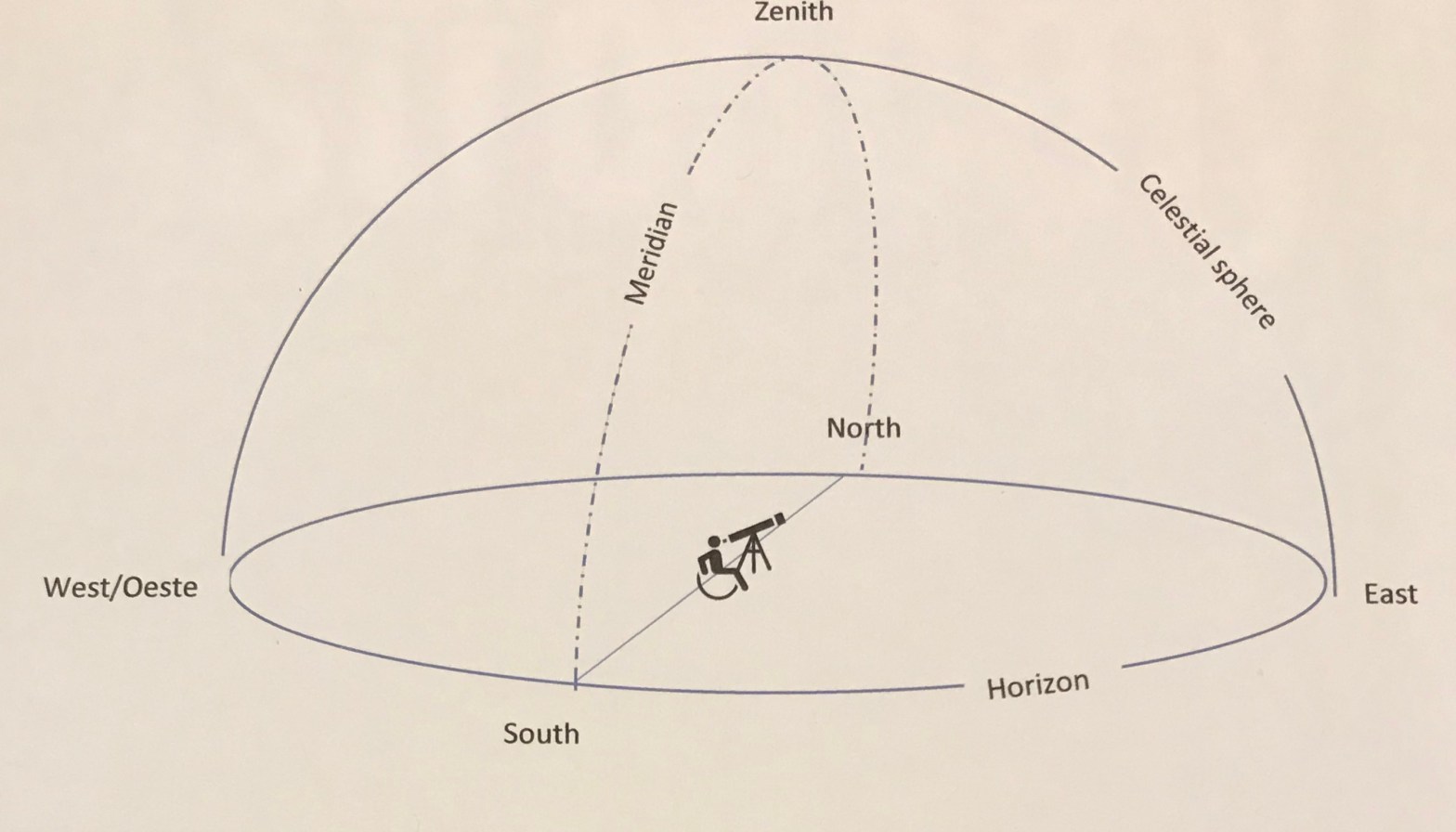
We can only see above the horizon, day or night. During the night sky observation, we see the stars above our horizon. Let us define some terms, for those of you who want to get oriented in the sky, and are doing it for the first time. With the help of a compass, you canContinue reading “Trivia 6”
Lesson 9
Velocities at perihelium and aphelion Using the deduced equation for the position vector in terms of the orbital angular momentum, we may develop equations to calculate the velocities in the perihelium and in the aphelion. errata: a correction must be made in the word “aphelium” and substitute it for the proper expression aphelion. Watch theContinue reading “Lesson 9”
Lesson 8
Kepler’s Second Law In this 13 minutes video, you will be introduced to the Second of the three laws of Johannes Kepler. This mathematical treatment of the law, makes clear about the changes in velocities at different places in the elliptical trajectory, and explains why the planets are faster at perihelium. Watch the video, byContinue reading “Lesson 8”
Trivia 5
Constellations are patterns of stars that can be recognized in the sky. Surely you are acquainted with the constellations of the zodiac, the ones that appear in the ecliptic: Pisces, Aries, Taurus, Gemini, Cancer, Leo, Virgo, Libra, Scorpius, Sagittarius, Capricornus, and Aquarius. This 12 constellations were recognized in the nocturnal sky since ancient times, andContinue reading “Trivia 5”
Lesson 7
In this video you will follow up with the Orbital angular momentum-continuation from last lecture. The presentation is made in Spanish. I was taping the presentation in Spanish, and after I realized it was already advanced that I decided to finished it in Spanish language. So, but an English speaking person can follow it also.Continue reading “Lesson 7”
Lesson 6
The Orbital Angular Momentum The orbital angular momentum is a very important concept that has physical consequences for a body revolving around another, like planets around the stars, or moons around the planets. In this lesson, we are exploring what the orbital angular momentum is, and developing an expression for the one problem body problemContinue reading “Lesson 6”
Inspiration for scientists
Reading from the book of Michael White, Isaac Newton-The Last Sorcerer-p.82 at start of chapter 5, I found the following inspirational reflection of Werner Heisenberg. “It is probably true quite generally what in the history of human thinking the most fruitful developments frequently take place at those points where two different lines of thought meet.Continue reading “Inspiration for scientists”
Lesson 5
In the literature we find that, to calculate the distance in parsecs (pc) to a particular star, we need to know the parallax angle in seconds of an arc, and determine the reciprocal of it. The question I would like to explore in this lesson is, the why do we do this. Look at theContinue reading “Lesson 5”
Lesson 4
In Lesson 1 you can follow the definition of the Astronomical Unit based on a “test” particle, that takes to revolve around a major body, exactly one year. We saw, that based on this definition, the Earth’s distance from the Sun is slightly smaller, compare with the test particle’s distance around the Sun. The resultContinue reading “Lesson 4”
 AstroDidactics